
Off-Track Garage Door Repair
A garage door that’s come off its track is crooked, jammed, or won’t move at all — and it’s not safe to keep operating. Here’s what causes it, why you shouldn’t force it back into place yourself, and what repair typically involves.
What “Off Track” Actually Means
Your garage door rolls on rollers that ride inside metal tracks along each side of the opening. When a roller jumps out of the track, or the track itself bends, the door can hang crooked, stick partway open or closed, or refuse to move in either direction.
Common Causes
Worn or damaged rollers
Rollers wear out over years of use. Once they’re worn enough, they can climb over the edge of the track instead of rolling smoothly inside it.
Bent or misaligned track
Tracks can bend from age, loose mounting hardware, or a direct impact. Even a small bend is often enough to derail a roller.
Vehicle or object impact
Backing into a garage door, even at low speed, commonly bends a track or knocks the door off its rollers.
A broken cable
If a lifting cable snaps or comes off its drum, the door can hang unevenly and pull itself off track on one side. See our cable repair page if this sounds like your situation.
Is It Safe to Use?
No. An off-track door is structurally unstable — it can drop unexpectedly or come further off the track if forced. Don’t try to open or close it, and don’t attempt to push the roller back into the track yourself.
Cost Factors
Off-track repair costs are higher if the track needs full replacement rather than realignment. See our full cost breakdown.
What an Off-Track Door Looks Like
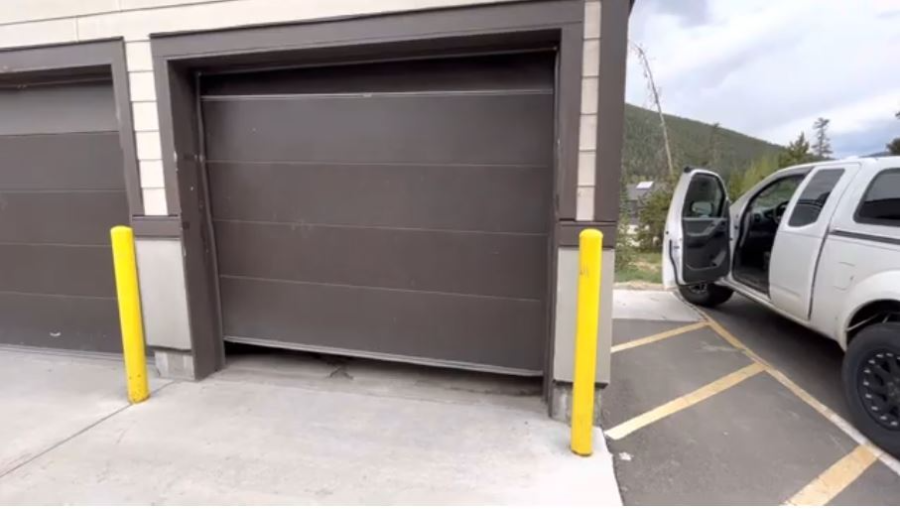
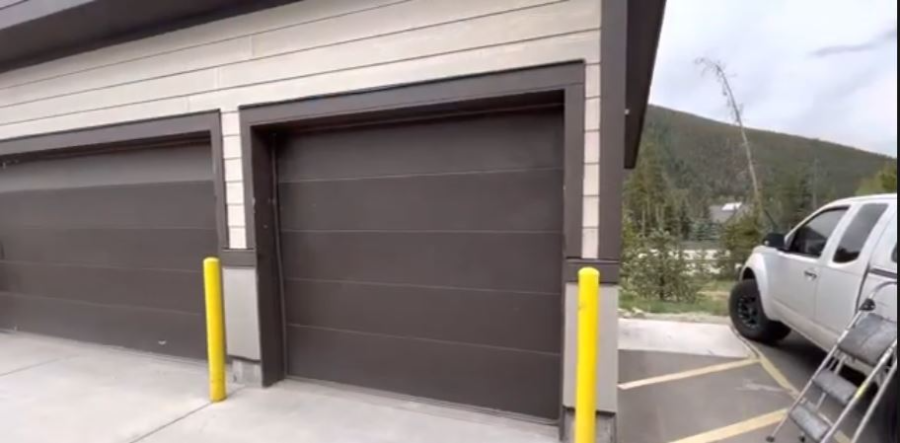
An off-track door is usually easy to spot visually — the door sits at a noticeable angle, a roller is visibly outside the track, or there’s a gap between the door panel and the track where there shouldn’t be one.
Signs Your Door May Be Off Track
- The door hangs at a visible angle instead of sitting level
- You can see a roller sitting outside the metal track
- The door moves partway, then stops or reverses on its own
- You hear a grinding or scraping sound as the door moves
- There’s a visible gap between the track and the wall bracket
Preventing Off-Track Problems
Worn rollers are one of the most preventable causes of an off-track door. Nylon rollers with sealed bearings typically last longer than older steel rollers, and periodic lubrication of rollers and tracks reduces the friction that accelerates wear.
Frequently Asked Questions
Can I push my garage door back on track myself?
Is a bent track always a full replacement?
How long does off-track repair take?

Get Help With an Off-Track Door
Stop using the door and call for a same-day assessment.